Mechanics
May be retained if condition, remaining usability and process function meet the task. Assessed alongside the mechanical scope of the project.
 Wladimir PoljakovIndustrial Automation Specialist
Existing equipment. New possibilities.
Keep what works.
Renew what matters.
I assess the existing control system and develop a modernization plan for PLCs, HMI, drives, industrial communication and electrical equipment. Serviceable components stay where retaining them makes technical sense.
A technical illustration, not a customer before-and-after. The replacement scope and target platform follow from assessment.
Existing system: Old PLC, Old HMI, Old drive, Legacy connection, Limited diagnostics.
Modernized system: New PLC, HMI / SCADA, New drive, Suitable connection, Better diagnostics.
Select a component. Each part needs its own decision about retention or replacement.
May be retained if condition, remaining usability and process function meet the task. Assessed alongside the mechanical scope of the project.
Condition, rating, operating modes, insulation, cooling and compatibility with the proposed drive are checked. A new drive does not automatically require a new motor.
Ranges, accuracy, supply, signal types and condition are checked. Serviceable, compatible sensors can often be incorporated into the new system.
Wiring, protection, available space, cooling and documentation are assessed. Reuse of the existing cabinet depends on the survey.
Unavailable components or an unsupported engineering environment can warrant migration assessment: software, I/O, cycle times, interfaces and hardware constraints.
Unavailable spare panels, source projects or required features may call for replacement. Tags, recipes, archives and operator actions are reviewed.
Where suitable repair or replacement is unavailable, the motor, load, power, control and communication are assessed. Selection is not based on kW alone.
Protocols, topology, nodes and diagnostics are checked. Suitable supported connections may stay; migration or gateways depend on compatibility.
Every decision depends on condition, requirements and the particular project.
First, understand the value already built into the machine. Then renew the parts that limit its operation.
Potential benefits depend on the project. No specific saving or additional service life is guaranteed.
Possible modernization paths. Machine function, I/O, communication, requirements and maintainability determine the target platform.
STEP 7 Classic, TIA Portal, S7-1200 and S7-1500 reflect practical experience, not a universal replacement chart. Other platforms can be considered for the project.
The starting conditions are fixed for this demo. It illustrates the assessment process without selecting equipment.
Example ready for assessment
Assess software, I/O, cycle time and interfaces.
Check the project, tags, recipes and functions.
Review motor, rating, control and communication.
Determine what can stay and what needs changing.
Define the work, checks and a suitable transition. PROFIBUS in this example does not mean the network must automatically be replaced.
Schematic demo only. No equipment connection, automated engineering verdict or specific purchasing recommendation.
Project modules move from an uncertain baseline to a tested control system.
Software, hardware, I/O, networks, documentation and actual machine operation.
What stays, what changes and which interfaces must be preserved?
PLC/HMI software, hardware selection, drawing changes and planned checks.
An agreed modification sequence and migration on the real machine.
Operating modes, automatic sequences, optimization and handover.
Legacy code contains knowledge about the machine. But a blind one-to-one copy does not always produce a good new system. The process function and its requirements come first.
Safety functions are assessed separately against the safety concept and required verification. Ordinary PLC software migration does not replace safety engineering.
After several modifications, documentation and reality may diverge. Modernization can include reviewing and updating the records within the agreed scope.
A complete new set of EPLAN drawings is not automatically included in every modernization. Documents, backups and handover scope are agreed for the project.
Real projects / 001
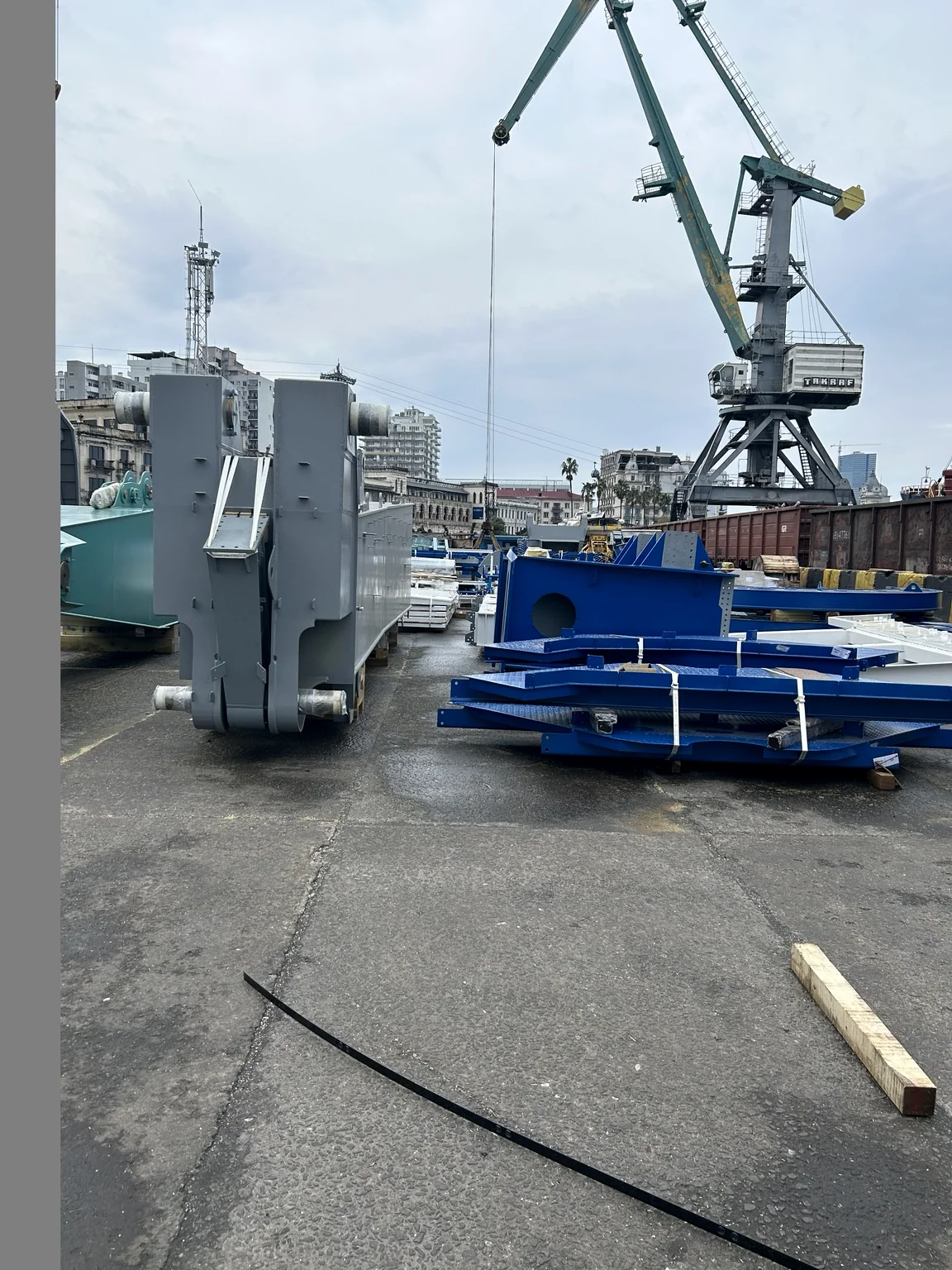
The harbor crane used Mannesmann drives without available spare parts or manufacturer support. A transition to Emotron was developed for the existing crane.
The crane was modernized and commissioned. The published case also documents an engineering PG prepared for remote service.
Read the caseReal projects / 006
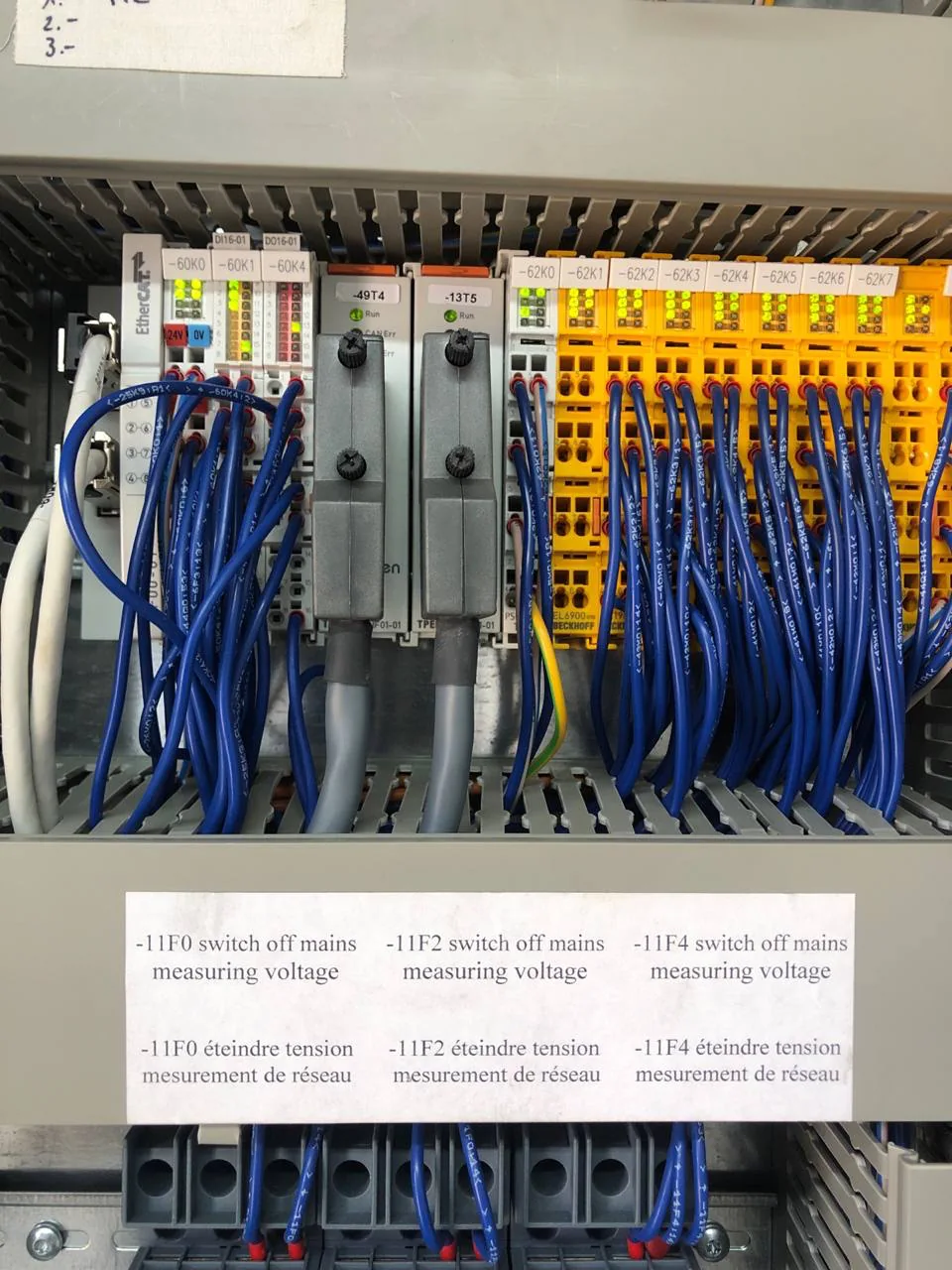
A failed Weidmüller communication controller interrupted exchange between TPEM and Siemens S7-1500. Direct replacement was unavailable. A new solution was developed using ОВЕН ПЛК210 and CODESYS V3.5.
The entire machine need not be standardized on one brand. Compatibility and a technically sound solution matter more.
Read the caseOperability and repairability are different questions. Planned modernization is easier to prepare than a transition after a complete failure.
Change the example conditions
Keep the verified baseline and periodically check component availability. No issues are flagged in this example.
Simplified indicator: 0–1 flagged issues = low, 2–3 = medium, 4–5 = high. This is not a risk calculation for your machine.
Working equipment does not become bad simply because it is old. Yet support, spare parts, expansion options and engineering tools may limit its continued use. Each component deserves its own assessment.
The transition needs an available shutdown window and a clear sequence. Some work can be prepared in advance; a phased approach depends on the project.
Rollback is not possible in every architecture. Modernization without production downtime is not promised.
STEP 5, STEP 7 Classic, older Siemens systems, HMI projects and drive engineering tools help reveal the original function. That understanding informs the new architecture.
Experience and qualifications ↗Send the type, a nameplate photo and a description of its function. This provides a starting point for assessing modernization options.
For example: 6ES5… / 6ES7… / HMI or drive type
Personal review through the contact page. No automatic spare-part matching is provided here.
Not necessarily. The condition, function and compatibility of each part are assessed. What can stay and what must change follows from that assessment.
There is no universal replacement. I/O, software, cycle time, networks, maintenance and project requirements guide the choice. Siemens S7-1200/S7-1500 and other platforms are considered for the task.
Possibly, if condition and compatibility permit. Motors, network and nodes are assessed separately. A name or age alone is not enough to promise retention.
That depends on architecture and scope. Advance work and phased implementation may help, but installation, checks and commissioning generally require an agreed window.
The original project is reviewed. Software, drawings, backups and documentation are handled within the agreed scope. Safety functions are considered separately.
An assessment can start before a major failure. Send the information you already have — I will review the baseline and we can define the next step.
Scope and feasibility depend on an assessment of the existing system.